This is the blog for GW students taking Human Evolutionary Genetics. This site is for posting interesting tidbits on: the patterns and processes of human genetic variation;human origins and migration; molecular adaptations to environment, lifestyle and disease; ancient and forensic DNA analyses; and genealogical reconstructions.

GWHEG figure

GWHEG figure

Saturday, September 15, 2018

In vivo CRISPR Editing

An paper in Nature focused on the the topic of how scientists are testing in vivo CRISPR editing in mice.  In the paper the scientists wanted to test how editing genes and targeting certain genes can help stop certain mutations from forming. There has been no way to test the in vivo editing until now, in which the scientists used two types of mice to perform tests. The scientists are testing the in vivo editing on the mice livers to see if there could be any mutations that could be stopped or slowed down. As well as there was carefully designed guide RNA that were used on the livers, both of the strategies are showing some sort of positive change in the mice's gene and can help start the research for more gene editing.

Thursday, September 13, 2018

The Ever-Shrinking Human Protein-Encoding Genome

A news article posted on Medical News Today on September 3rd reports on a scientific journal article written in Nucleic Acids Research, which hypothesizes that many fewer genes in the human genome code for proteins than previously thought. This process of discovering all the functional genes in the human genome began with the Human Genome project, which at the onset found approximately 40,000 functional human genes, but throughout the project decreased that number to 20-25,000. This study in Nucleic Acids Research cross-referenced three different proteome databases looking for pseudogenes that were identified as functional genes, and found substantial evidence for close to 3,000 and potentially greater than 4,000 pseudogenes. These findings provide strong data for the number of functional human genes settling below 20,000, and most likely lower than that. Fewer functional human genes means that fields such as gene therapy and biomedicine do not have to sort through pseudogenes to find genes responsible for certain human traits or disease, and therefore isolating the function of different human genes a less clunky process.

Wednesday, September 12, 2018

Scientists Are Retooling Bacteria to Cure Disease

An article published in The New York Times discusses a paper in Nature which recently confirmed the successful manipulation of DNA in bacteria, engineering them to treat a rare inherited disease called phenylketonuria, or PKU. This type of manipulation of DNA has been done for years but only with mice, this was the first successful try with humans. If this new bacteria continues breaking down a metabolism byproduct, an amino acid called phenylalanine, it would signify a huge change for people suffering from PKU. However, they engineered the phenylalanine genes to “shut down” if they sensed high levels of oxygen around them, this may shut the genes permanently for people who also suffer from hyperoxia (excess of oxygen in body tissues).

Alejandra Paredes

Thursday, September 6, 2018

A Neanderthal - Denisovan 1st generation hybrid?

A recent article in the New York times discuss a paper/letter in Nature titled The genome of the offspring of a Neanderthal mother and Denisovan father. Basically, the DNA extracted from a ~90,000 year old bone from a Siberian cave seems to be part Neanderthal and part Denisovan.  If true, it's really remarkable that they happen to get a sample from a first generation hominid hybrid. But I wonder if this might be a Neanderthal sample contaminated with Denisovan DNA?

Friday, April 27, 2018

Non-potluck post: Intelligence and genetics.

The study of intelligence has previously been considered controversial, however, Plomin and von Stumm (2018) state that the scrutiny has had a positive effect on the quality of the research produced. Plomin and von Stumm (2018) suggest the use of genome-wide polygenic scores (GPS), that take into account multiple regions of variation within the genome, are beneficial as an investigative tool in understanding the genetic basis of intelligence. 

The heritability of intelligence is noted by Plomin and von Stumm (2018) to be about 50% based on previous studies, particularly those looking at twins. When specifically looking at SNPs the heritability of intelligence is stated to be around 25%, whereas GPS heritability is stated to be about 10% (Plomin and von Stumm, 2018). It is suggested by Plomin and von Stumm (2018) that the discrepancy between the heritability values for SNPs and GPS could be ameliorated through increasing the GWAS sample size as well as looking at the interaction between genes and the environment amongst other considerations.

It is also noted by Plomin and von Stumm (2018) that this particular area of research has many ethical, legal, and social considerations. Particularly the issues associated with stigmatisation, as seen in the misuse of IQ data in the 1900’s as a way of separating out individuals, as well as the potential use of biological determinism (Plomin and von Stumm, 2018).

Click here to see the article.

Third post from Nature Reviews Genetics.

References
Plomin, R., and von Stumm, S., 2018. The new genetics of intelligence. Nature Reviews Genetics. 19: 148-159.

Victoria Lockwood

Non Potluck: aDNA from tropical environments?

The authors of this recent study in AJPA compared the performance of two different methods for extracting aDNA, specifically from hot, humid environments.  Samples came from several
archaeological sites and from a chimpanzee tooth collected in Tanzania in 1966.  Their results indicated that both the creatively named Method D and Method H were similarly effective in recovering aDNA.  However, Method H produced sequences with both higher endogenous content and clonality, while Method D produced shorter fragments.  The authors argue that because aDNA is highly fragmented in these environments, that Method D (the simpler one) is preferred.  They do acknowledge that these results are only from teeth, and that other material may yield different results.  Interesting nontheless.

(AJPA post 3/3)

Non Potluck: DNA methylation/demethylation

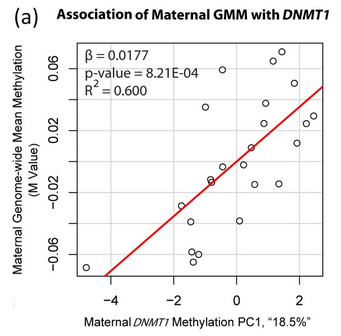
We didn't get into epigenetics much this semester, but a recent AJPA article on the topic caught my attention.  The authors investigated ten genes related to DNA methylation/demethylation in the context of stress and overall health. 25 mother-infant dyads from Goma, DRC were studied.  Genetic and epigenetic data were combined with surveys and interviews on perinatal stress.  Stressors included everything from in-law stress to war trauma.  Results indicated that most genes in question did not affect genome-wide methylation or birthweight.  However, DNMT1, DNMT3A, TET3, and MBD2 were found to correlate with maternal methylation and birthweight.  The authors suggest that these genes may be part of a molecular mechanism underlying the human biological response to stress.

Read the full article here.

(AJPA post 2/3)